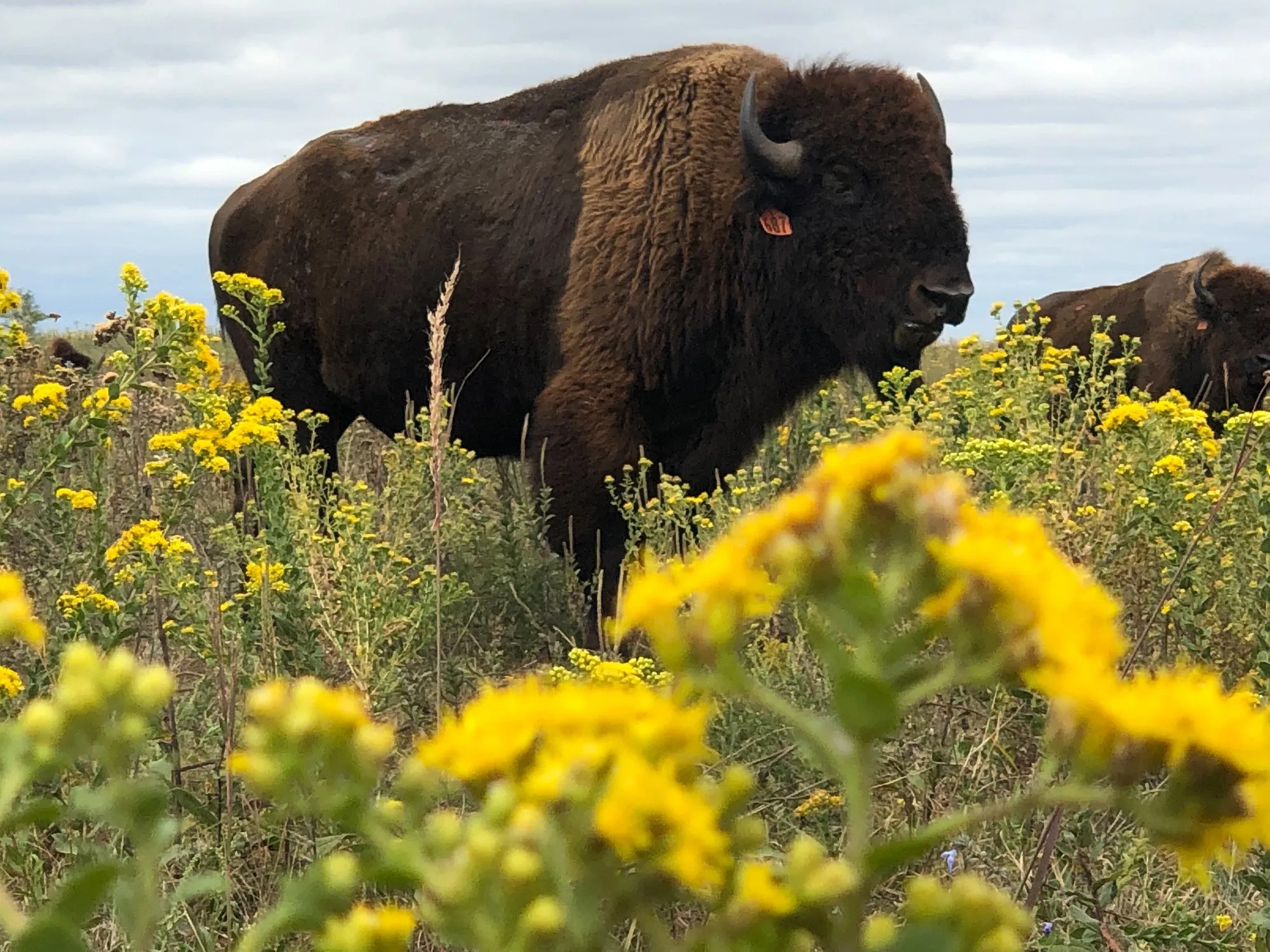

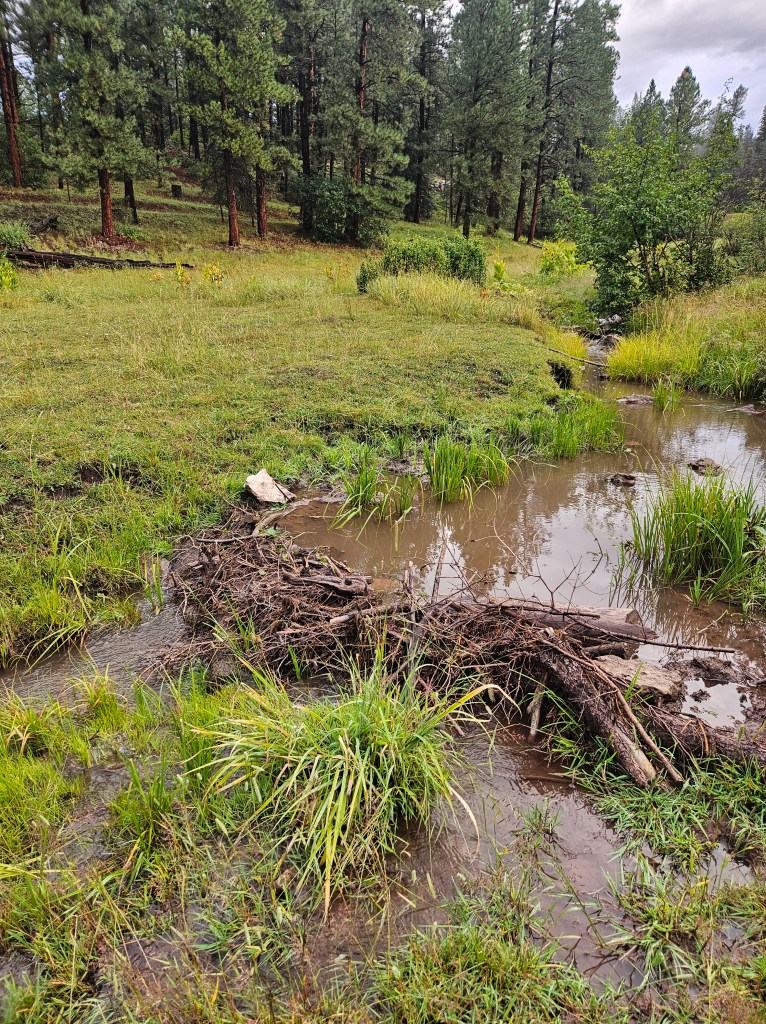
Bison and beavers are the two great ecosystem engineers of North America, together creating and maintaining the vast wetlands and prairies that defined the natural wealth of the continent. For this reason, the New Mexico Bison Restoration Network also undertakes low-tech process-based restoration of riparian areas on lands that we manage with bison, and elsewhere on a contract basis. The essence of low-tech process-based restoration is to mimic the work of beavers by building small dams from young conifers on high-order streams in order to bring back the riparian species (willows, cottonwoods, alders) that beavers need for habitat and forage. Without this human intervention, beavers cannot return to streams that have been denuded of vegetation by cattle grazing. But once they return, they will build a series of dams that retain water on the landscape longer, maintaining consistent flows throughout the growing season for acequias and farmers. Building “beaver dam analogs” and other woody debris stream additions is thus the first step in returning a healthy dynamism to the many beleaguered waterways of the west.
Read more about this philosophy and practice here:
The Low-Tech Process Based Restoration of Riverscapes Design Manual
Elsewhere Around the State
Thanks to efforts from conservationists and scientists, the American beaver will now get $1.5 million of funding from the general fund for at-risk wildlife species in New Mexico, beginning in 2025.
 The New Mexico Bison Restoration Network