Our Research
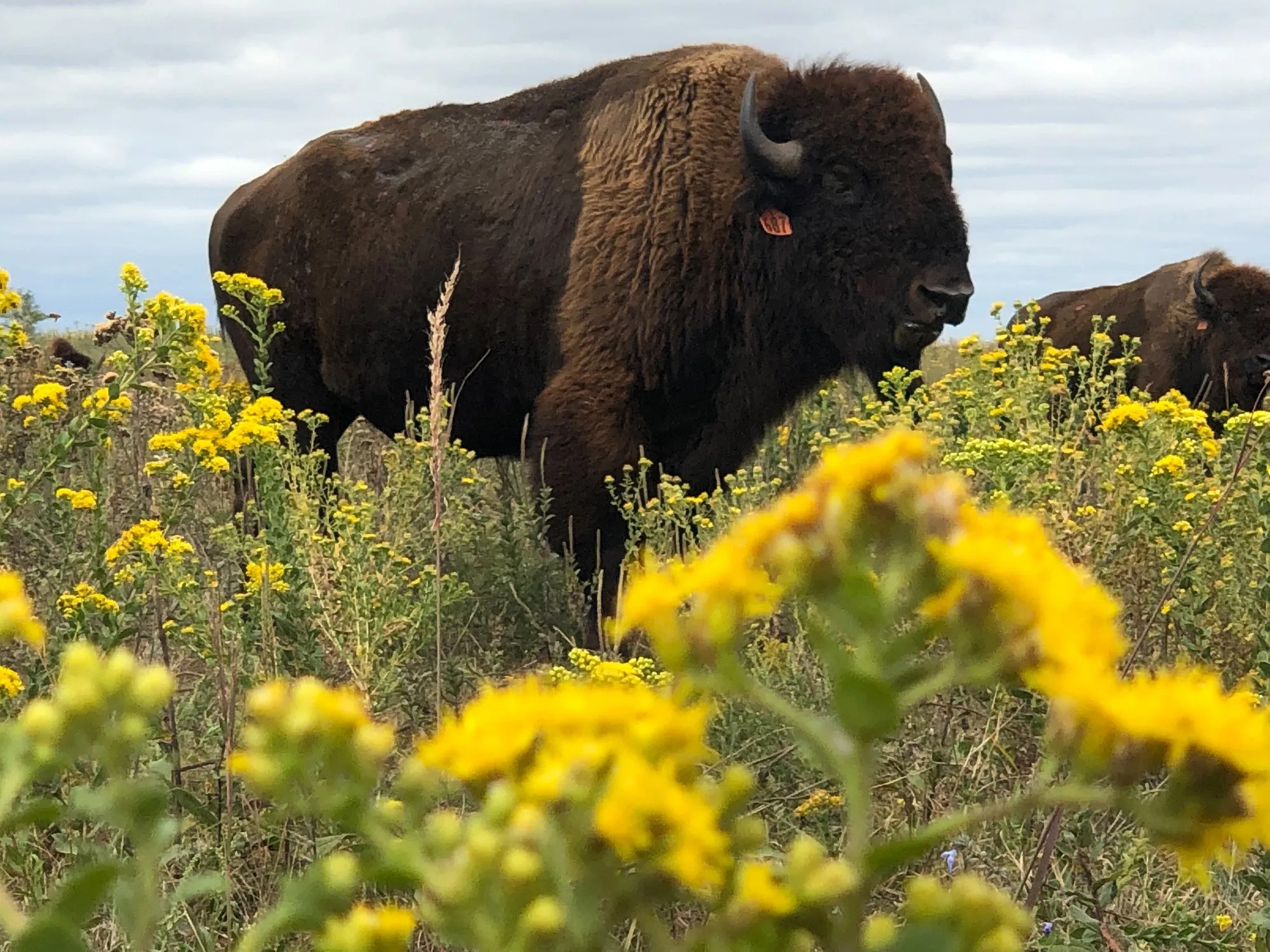
- Trialing virtual fencing on bison
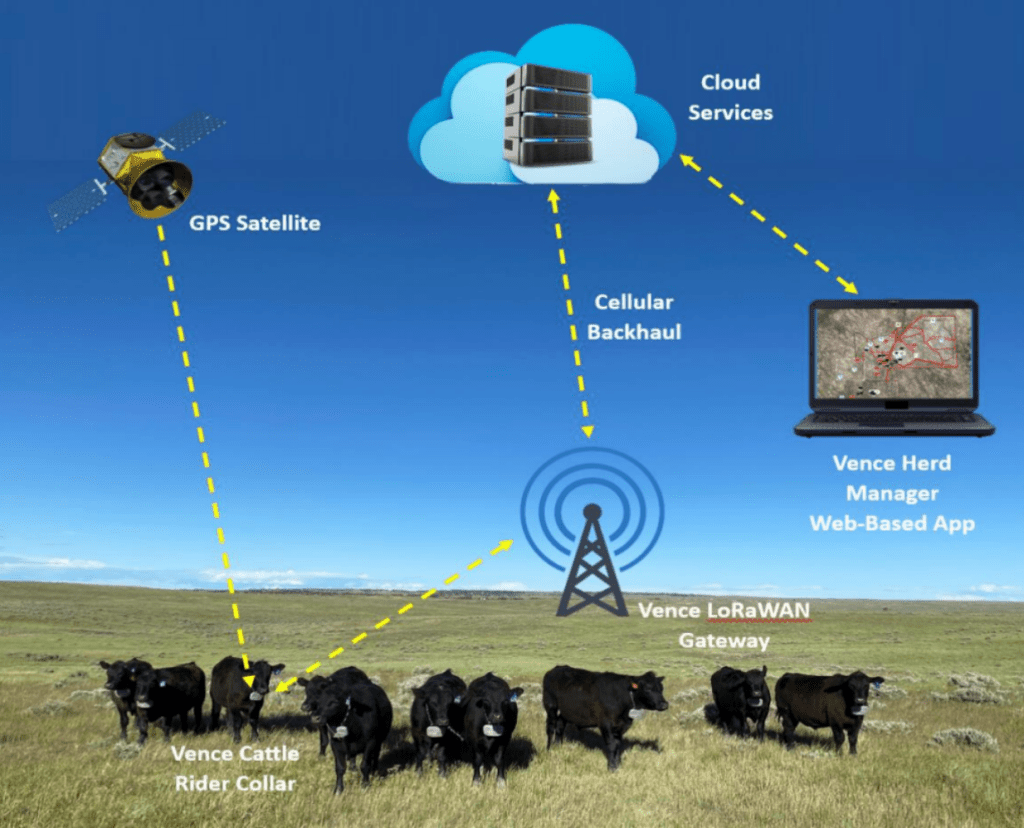
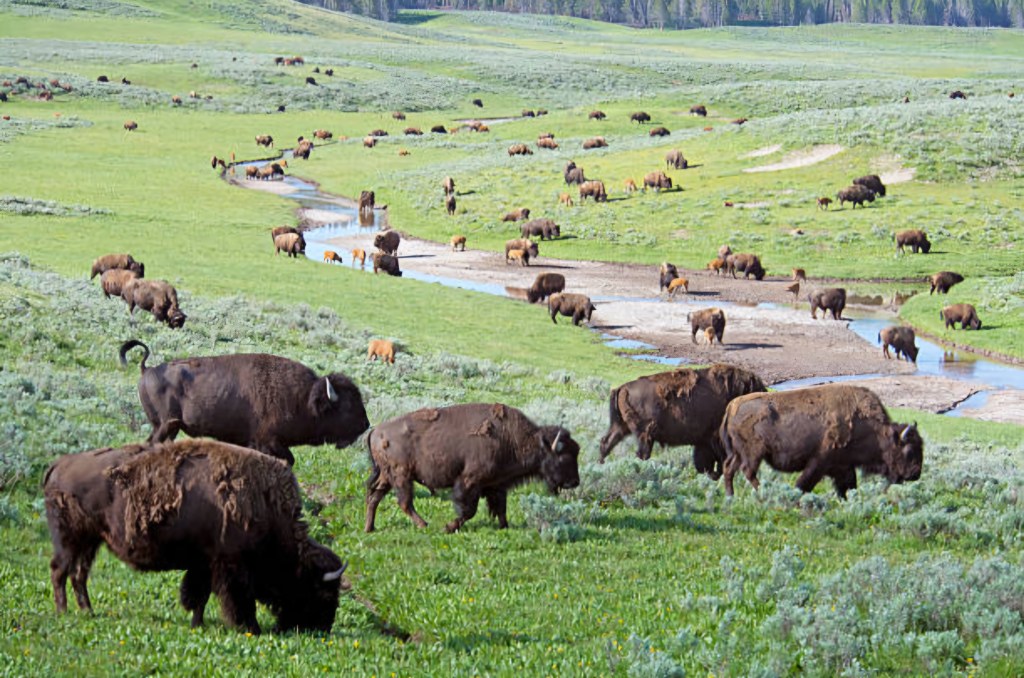
With the highly promising emergent technology of virtual fencing, a new regenerative ranching paradigm that allows graze animals to be managed specifically for restoration outcomes with great precision has become possible. We now have an unprecedented opportunity to transition the domestic meat market in the US toward the highest outcomes for soil health, grassland health, biodiversity enhancement, and carbon sequestration. Currently, virtual fencing manufacturers cannot keep up with the demand from ranchers and agencies as VF undergoes widespread adoption for cattle because of its incredible utility for containment and management. Virtual fencing is many, many times less expensive than traditional fencing. The NMBRN proposes to trial what promises to be the most cost-effective way to reintroduce bison yet possible, by leasing a combination of state, federal, and private land, absorbing excess bison from federal herds that are continually successful enough to be outpacing the carrying capacity of their ranges, and by employing virtual fencing without the need for perimeter fencing.
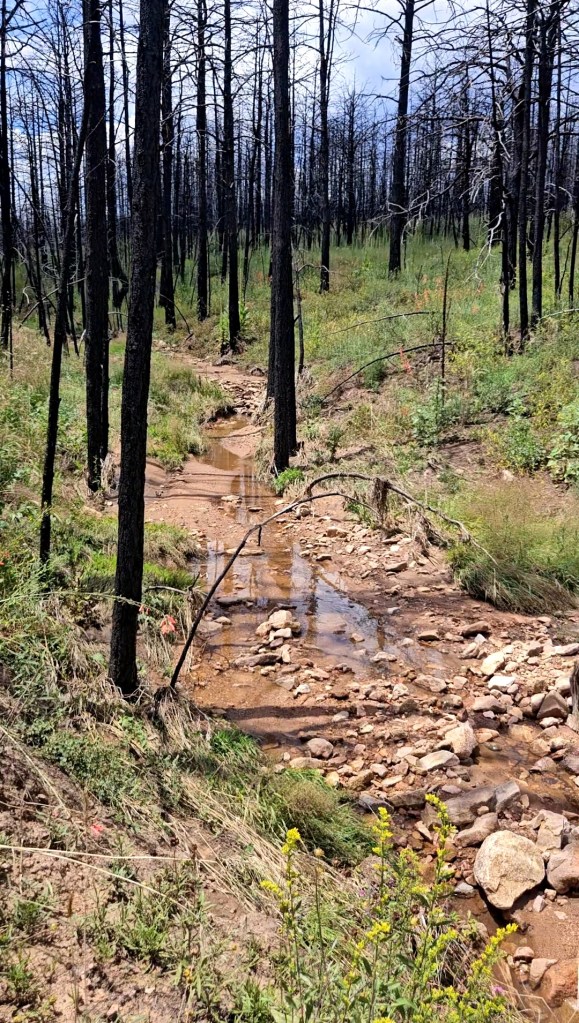
The NMBRN will begin a three-year research trial in spring 2025 on the efficacy of virtual fencing for containing and managing bison on a 2,100-acre ranch in the Hermit’s Peak/Calf Canyon burn scar in the lush highlands of the Rocky Mountains in New Mexico, and on a 5000-acre lease on Navajo trust land near Grants, New Mexico.
So what exactly is virtual fencing? Here’s a helpful powerpoint: https://www.climatehubs.usda.gov/sites/default/files/Vence%20USDA%20Climate%20Hub%20Clayton%20NM.pdf
2. Enhanced rangeland restoration through applications of biochar, compost, and mulch
We know well that farming grains or vegetables requires farmers to return nutrients and biomass to the soil because of what crop production takes out of the soil. Yet until recently, there had been no scientific research ever undertaken on whether grazed rangelands (which make up roughly 40% of the earth’s terrestrial regions) would also benefit from applications of biochar, compost, and mulch. According to newly published research by the Quivira Coalition on New Mexico ranches, the application of organic amendments to working rangelands does indeed dramatically increase plant cover, water infiltration, above- and below-ground biomass, biodiversity, and soil carbon storage, all of which beget climate change resilience. The New Mexico Bison Restoration Network will now scale up this trial plot-sized research on organic amendments into landscape-scale research on a 2,100-acre ranch outside Las Vegas that burned in the Hermit’s Peak/Calf Canyon wildfire of 2022, and on a 5600-acre arid rangeland research site near Grants, New Mexico.

3. Adapting better pollinator planting mixes for prairie restoration
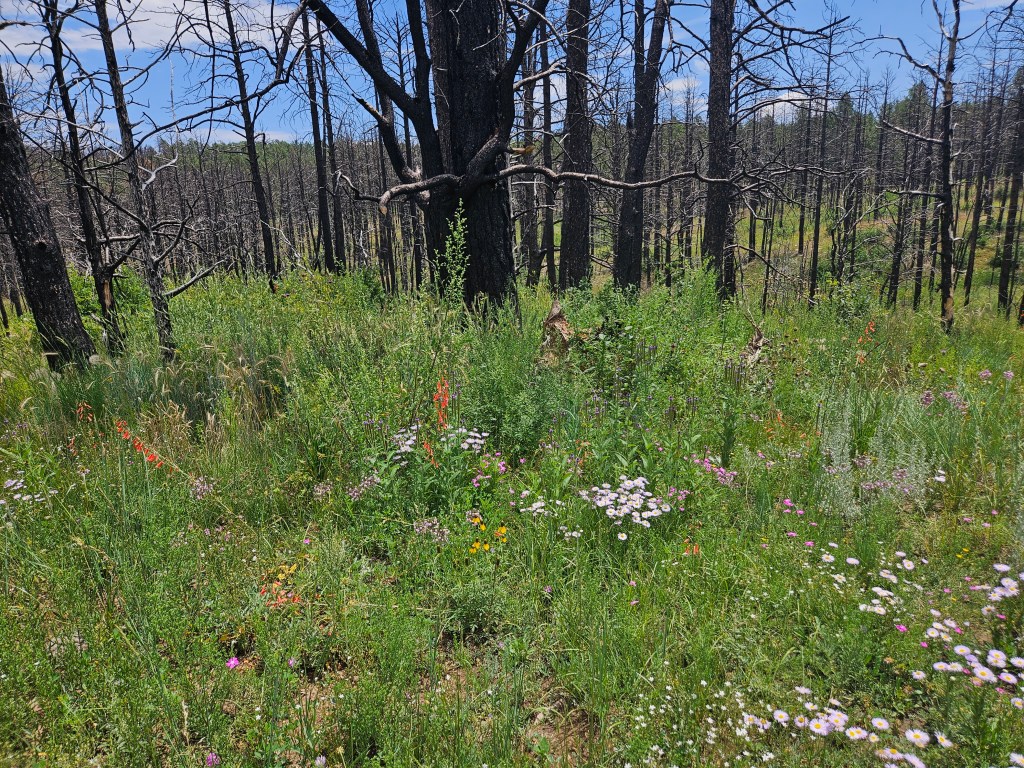
According to brand new research by the Society for Ecological Restoration, there is an important gap between what is being planted for pollinators and what they actually need; commercially available pollinator seed mixes for grassland restoration are phenologically dissimilar to prairie remnants. Native seed mixes are widely available, and yet they do not represent the seasonal breadth of blooming that native prairie remnants do, leaving pollinators without much forage for much of the year. Pollinator mixes bloom primarily in late July through August, whereas prairie remnants had greater phenological evenness across the growing season.
The New Mexico Bison Restoration Network is working on surveying, seed collecting, and making commercially available more diverse seed mixes that will be more representative of native shortgrass, mixed-grass, and tallgrass prairie wildflower species. This work will take place on working rangelands throughout northern New Mexico and in our nursery in Santa Fe.
Source:
https://onlinelibrary.wiley.com/doi/full/10.1111/rec.14352
Other bison research across North America
- The Ecological Future of the North American Bison: Conceiving Long-Term, Large-Scale Conservation of Wildlife (2008): https://conbio.onlinelibrary.wiley.com/doi/abs/10.1111/j.1523-1739.2008.00899.x
2. Historic Distribution and Challenges to Bison Recovery in the Northern Chihuahuan Desert (2007): https://conbio.onlinelibrary.wiley.com/doi/ftr/10.1111/j.1523-1739.2007.00810.x
3. The role of herbivores in Great Plains conservation: comparative ecology of bison and cattle (2011): https://esajournals.onlinelibrary.wiley.com/doi/full/10.1890/ES10-00152.1
4. Plant community responses to bison reintroduction on the Northern Great Plains, United States: a test of the keystone species concept (2018): https://onlinelibrary.wiley.com/doi/abs/10.1111/rec.12856?_gl=1*1l29rsh*_gcl_au*MzUwNzkyNDkyLjE3Mzg3OTc0NDYuNjc0NzY0MzU1LjE3Mzg3OTg3MTIuMTczODc5ODcxMQ..
5. Ecosystem engineering by bison (Bison bison) wallowing increases arthropod community heterogeneity in space and time (2018): https://esajournals.onlinelibrary.wiley.com/doi/full/10.1002/ecs2.2436
6. Vegetation Trends in Tallgrass Prairie From Bison and Cattle Grazing (2005): https://esajournals.onlinelibrary.wiley.com/doi/full/10.1890/04-1958
Other Amazing Restoration Work Around the World
Rewilding Europe is rewilding bison
In 2016, Rewilding Europe released a small herd of European bison into the Southern Carpathian mountains of Romania, where the reintroduction is beginning to have significant positive economic and social impact. Rewilding Europe and WWF Romania are working together to create one of the largest contiguous wild areas in Europe; extending across 3 million hectares, it would encompass various protected areas and give the bison space to take their place in a landscape governed by natural processes. Today the population has grown to over 170 animals, one of the largest free-roaming populations in Europe.
Rewilding Europe is also reintroducing bison to Portugal, Poland, Bulgaria, Azerbaijan, and the UK!
New research from Yale University and the Global Rewilding Alliance shows that 170 rewilded European Bison in Romania’s Tarçu mountains are helping to draw down and store the equivalent CO2 emissions of removing up to 84,000 average US cars from the road. This research found that a group of 170 European Bison through their grazing in an area of 48 km2 of grasslands in a wider landscape of 300 km2 help to capture approximately an additional 54,000 tonnes of carbon per year, nearly 10 times more than without the bison.
Sources:
- Schmitz, O. J. et al. Trophic rewilding can expand natural climate solutions. Nat. Clim. Change 1–10 (2023), https://www.nature.com/articles/s41558-023-01631-6
- Rizzuto, M., Leroux S.L, & Schmitz, O.J. Rewiring the carbon cycle: a theoretical framework for animal-driven ecosystem carbon sequestration. Journal of Geophysical Research: Biogeosciences 129, https://doi.org/10.1029/2024JG008026
The Great Green Wall in Africa
The Great Green Wall is an African-led movement with an epic ambition to grow an 8,000km natural wonder of the world across the entire width of Africa to stop the rapid southward expansion of the Sahara Desert.
A decade in and roughly 15% underway, the initiative is already bringing life back to Africa’s degraded landscapes at an unprecedented scale, providing food security, jobs and a reason to stay for the millions who live along its path.
The Wall promises to be a compelling solution to the many urgent threats not only facing the African Continent, but the global community as a whole – notably climate change, drought, famine, conflict and migration. Once complete, the Great Green Wall will be the largest living structure on the planet, 3 times the size of the Great Barrier Reef.
 The New Mexico Bison Restoration Network